
Seeing the Big Five Near Durban: A Local’s Guide to Hluhluwe-iMfolozi
Durban is better known for warm surf and curry than wildlife. Yet three hours up the coast lies one of Africa’s great rhino strongholds, where lion, leopard, elephant, rhino and buffalo all roam free. Hluhluwe-iMfolozi Park is the premier Big Five reserve within easy reach of Durban. For many visitors it becomes the highlight of their trip to KwaZulu-Natal.
From the beachfront to the bush: the road north
The journey is part of the experience. Leaving Durban on the N2, you pass Umhlanga and Ballito and cross the wide Tugela River into Zululand. Then you roll through sugar cane fields and eucalyptus plantations dotted with traditional Zulu homesteads. Near Mtubatuba the land opens up, and the hills of the reserve appear on the horizon.
It’s about 280 km in total, roughly three hours on good tarred roads. An early start means you can be through the gate soon after it opens, when the animals are most active.
One park, two very different worlds
Many people don’t realise that Hluhluwe-iMfolozi was once two separate reserves, joined into one park of about 96,000 hectares. Each half has its own character, a good Big 5 safari operator explores both to give you the most fulfilling experience.
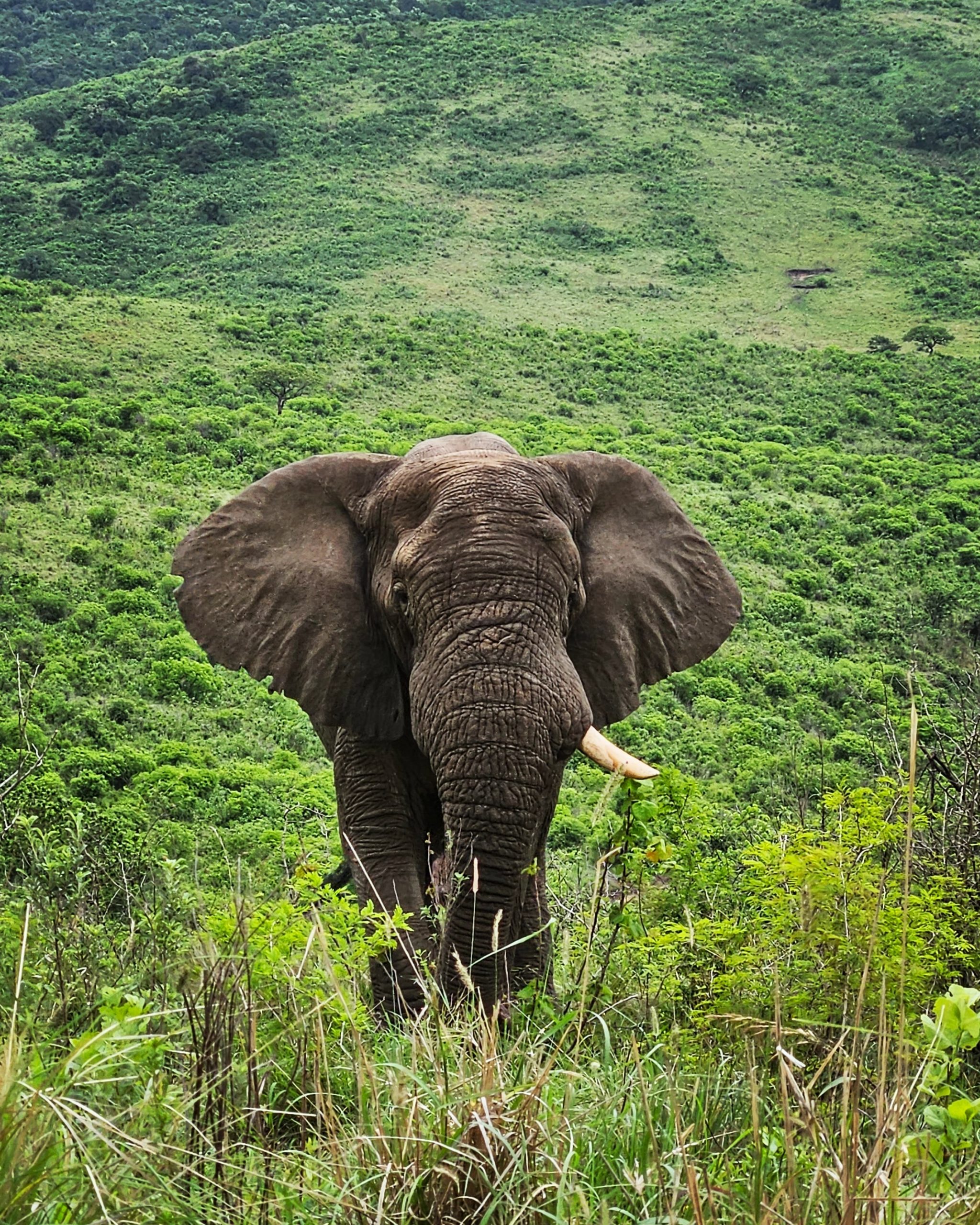
The Hluhluwe section (north) is hilly, green and higher, with thick riverine forest along the Hluhluwe River and cooler, misty mornings. Elephant and buffalo favour these slopes, and the views from the ridges are spectacular.
The iMfolozi section (south) is lower, hotter and more open, a classic African savanna cut by the Black and White iMfolozi rivers. The wide grasslands make it superb for spotting white rhino, and lion often hunt across these plains.
The iMfolozi section is also where rhino conservation in Africa began. When the southern white rhino had dwindled to a tiny population in the early 1900s, the last survivors lived here. In the 1960s, the conservation effort known as Operation Rhino began moving rhino from iMfolozi to parks across southern Africa. Almost every southern white rhino alive today descends from this area.
How to find each of the Big Five
Rhino. This is the park’s star, and your best chance anywhere in Africa. Scan the open grassland in the Hluhluwe and iMfolozi section for grey shapes grazing in the early morning. White rhino have wide, square lips for grazing. Black rhino have a pointed, hooked lip for browsing and hide in thicker bush.
Elephant. Look for broken branches and fresh dung on the road, both signs a herd has just passed. Midday is a good time to find them drinking or cooling off at rivers and waterholes.
Buffalo. Herds move through the grassy valleys, while old bulls, known as “dagga boys”, often wallow alone in muddy pools. Give them space, as they’re more dangerous than they look.
Lion. Lions rest through the heat of the day, so your best chances are at dawn and late afternoon. Watch for vultures circling or gathered in trees, which can point to a kill nearby.
Leopard. The most elusive of the five. Check large trees along riverbeds, especially in the late afternoon, and look for a tail hanging down from a branch. A leopard sighting is luck as much as skill, and that’s what makes it special.
Beyond the Big Five, keep an eye out for giraffe, zebra, nyala, kudu, hyena, cheetah and the endangered African wild dog. Birdwatchers can easily see dozens of species in a single day.
Tips from our guides
- Start early. The first two hours after the gate opens are often the most rewarding of the day.
- Slow down. The best sightings often come from stopping, switching off and simply watching a waterhole.
- Bring binoculars. One pair per person makes a huge difference.
- Dress in layers. Mornings can be cool, even in summer, and afternoons get hot.
- Stay quiet near animals. Low voices mean animals stay relaxed and sightings last longer.
- Pack for photography. A zoom lens of 200 mm or more and a spare battery are worth bringing.
Seasons at a glance
May to September (dry season): cooler, clearer days. Thinner bush and animals gathering at water make game viewing easier.
October to April (green season): lush scenery, newborn animals and migrant birds, with longer gate hours and afternoon thunderstorms.
Gates are open 05:00–19:00 from October to March and 06:00–18:00 from April to September.
Your questions answered
How far is Hluhluwe-iMfolozi from Durban?
About 280 km, or roughly three hours’ drive north along the N2.
Is Hluhluwe-iMfolozi a good alternative to Kruger?
Yes. For visitors based in Durban it’s a far easier Big Five option, and it’s one of the best places in the world to see rhino.
What is the difference between Hluhluwe and iMfolozi?
They are two sections of the same park. Hluhluwe in the north is hilly and green. iMfolozi in the south is open savanna and the historic heart of rhino conservation.
Is it safe to visit?
Yes. Guided safaris follow park rules, and visitors stay in the vehicle except at designated picnic sites, hides and camps.
Do I need malaria tablets?
The area is very low-risk for malaria. Ask a travel clinic for advice before your trip.
Plan your Big Five safari with Durban Safaris
Whether you have one day or several, Durban Safaris can take you from your Durban hotel to the heart of rhino country with a guide who knows the park well. Send us your travel dates and group size, and we’ll suggest the safari that suits you best.